New Zealand’s Colourful Natural Treasure
29th Jun 2026
The Story of Pāua: New Zealand’s Colourful Natural Treasure
Most of us recognise pāua by its colour.
That flash of blue, green, purple and silver feels instantly familiar in New Zealand. It has turned up in jewellery boxes, seaside gift shops, family homes, garden ornaments, mantelpieces and little treasures sent across the world.
Pāua has sparkle. It has drama. It absolutely knows how to catch the light.
But before pāua becomes a polished shell, a pendant, a keepsake or a gift, it begins as something living - a remarkable sea snail found along the rocky coastline of Aotearoa New Zealand.
And yes, sea snail may not sound glamorous at first.
But give pāua a moment. It has more personality than you might think.
Most of us know the shell, but not the creature
Pāua is New Zealand’s native abalone. It belongs to a wider family of abalone species found around the world, but our pāua has a very special connection to Aotearoa.
In life, pāua cling to rocky reefs using a strong muscular foot. They feed mainly on seaweed, move slowly, and are built for coastal conditions where waves, rocks, predators and weather all play their part.
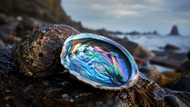
From the outside, a pāua shell can look dark, rough and sea-worn. It does not immediately show off. Very understated. Very coastal. Very dark and broody - until the inside catches the light and gives you that unmistakable flash of wow.
Once cleaned and polished, the inner shell reveals those extraordinary colours New Zealanders know so well - deep ocean blues, greens, purples, silver, turquoise and sometimes flashes of pink or gold.
It is a lovely reminder that nature does not always put its best outfit on the outside.
A New Zealand species with a wider family
There are many species of abalone around the world, but New Zealand has three endemic pāua species: black-foot pāua, yellow-foot pāua and white-foot pāua. Endemic means they are found naturally here and nowhere else.
The black-foot pāua is the one many people are most familiar with. It is also one of the larger abalone species in the world, growing up to around 18 to 20 centimetres.
That is quite something when you think about how often we see pāua as small pieces in jewellery, gifts and decorative items. That tiny flash of colour may have started as part of a strong sea creature that spent years living along a rocky New Zealand coastline.
A small piece of pāua can carry a much bigger story than you might expect.
Why does pāua shell shine like that?
The colour of pāua is one of the reasons it has become so loved.
Unlike a flat painted colour, pāua shell has an iridescent quality. It shifts with the light. Turn it slightly and the colours seem to move - blue becomes green, purple becomes silver, and a tiny flash of pink or gold can appear where you did not expect it.
That is why no two pieces of pāua look exactly the same.
Some shells are deep and moody, full of dark ocean blues and greens. Others are brighter, with silver, violet and turquoise tones. The colour can vary depending on the species, the shell, the environment and even what the pāua has been feeding on during its life.
That is part of the magic. Pāua does not feel mass-produced because nature never makes it the same way twice - and honestly, that is hard to beat.
The shell is beautiful, but it also has a job
It is easy to look at pāua shell and think only of its beauty. But to the pāua, the shell is not decoration.
It is protection.
The shell helps protect pāua from predators and is well suited to life in moving water. It has to handle waves, rocks, pressure and the rough conditions of coastal reefs. Even the small holes along the shell have a purpose. They are respiratory pores, helping with breathing, waste and spawning.
So while we may admire pāua shell for its colour, it has always been more than decoration.
Before it became something beautiful to us, it was something essential to the pāua’s survival.
So why do people use pāua shell?
This is the part that matters.
Pāua is not harvested because people want to take a beautiful shell from the sea and ruin its little home. Pāua has long been valued as kaimoana - seafood - in New Zealand. It is gathered and fished for its meat, under rules designed to manage the resource.
The shell is part of that same pāua.
When used well, it means the beauty of the shell is not simply discarded or forgotten. It can be cleaned, polished and given another life as jewellery, gifts, artwork, garden pieces, decoration and keepsakes.
That does not make pāua something to take lightly. Quite the opposite.
It means the material deserves respect, careful sourcing and thoughtful use. The shell is not just “pretty.” It comes from a living marine species, and that gives it more meaning, not less.
Pāua needs care and respect
Because pāua is so recognisable and valuable, it has to be carefully managed.
In New Zealand, pāua gathering is controlled by rules around size, catch limits and where it can be taken. These rules exist for good reason. If too many pāua are collected, or if undersized pāua are removed, local populations can be placed under pressure.
Pāua also face natural and environmental threats. Predators such as starfish, crabs, octopus and fish can prey on them. Changes in the coastal environment, including sedimentation and loss of seaweed food sources, can also affect their growth and survival.
One especially interesting fact is that pāua have blue blood. Their blood is copper-based, unlike human blood, which is iron-based and red. Pāua are also far more delicate than their strong shell might suggest. Even a small nick can cause real harm, which is why they need to be handled with care and respect.
From coastline to keepsake
Pāua has long had a place in New Zealand gift culture.
For visitors, it is often one of the most recognisable natural materials they associate with Aotearoa. It is beautiful, lightweight, easy to take home and immediately connected with memories of this country.
For New Zealanders, pāua can feel nostalgic. Many people remember seeing pāua shells in family homes, seaside shops, jewellery displays, gardens, or tucked into holiday memories from childhood.
And let’s be honest - plenty of Kiwi homes once had a pāua shell sitting somewhere important, doing something practical, decorative or slightly mysterious. Pāua has been part of the furniture for a long time.
That is why it has lasted. Not because it is flashy, although it certainly knows how to sparkle, but because it feels connected to something real.
A small pāua gift can remind someone of a coastline, a person, a place, a holiday, or home.
More than a beautiful shell
The next time you see pāua, it is worth pausing for a moment.
Behind those colours is a living sea creature, a rocky coastline, years of slow growth, a shell built for survival, and a natural material that has become part of New Zealand’s gift story.
Some pāua can live for up to 30 years, which makes the shell feel even less like a simple seaside souvenir.
Pāua is beautiful, yes. But it is also useful, meaningful, distinctive and deeply connected to place.When treated with care, pāua shell can carry a story long after it leaves the sea - not as something wasted, but as something remembered.
Small, natural, full of colour, and quietly unforgettable.
Perfectly New Zealand, really.